
Screen Printing Services for Promotional Products in Melbourne: A Complete Expert Guide
Discover how Melbourne businesses can use screen printing services for promotional products to create high-impact branded merch that delivers real ROI.

Written by
Dane Santos
Branding & Customisation
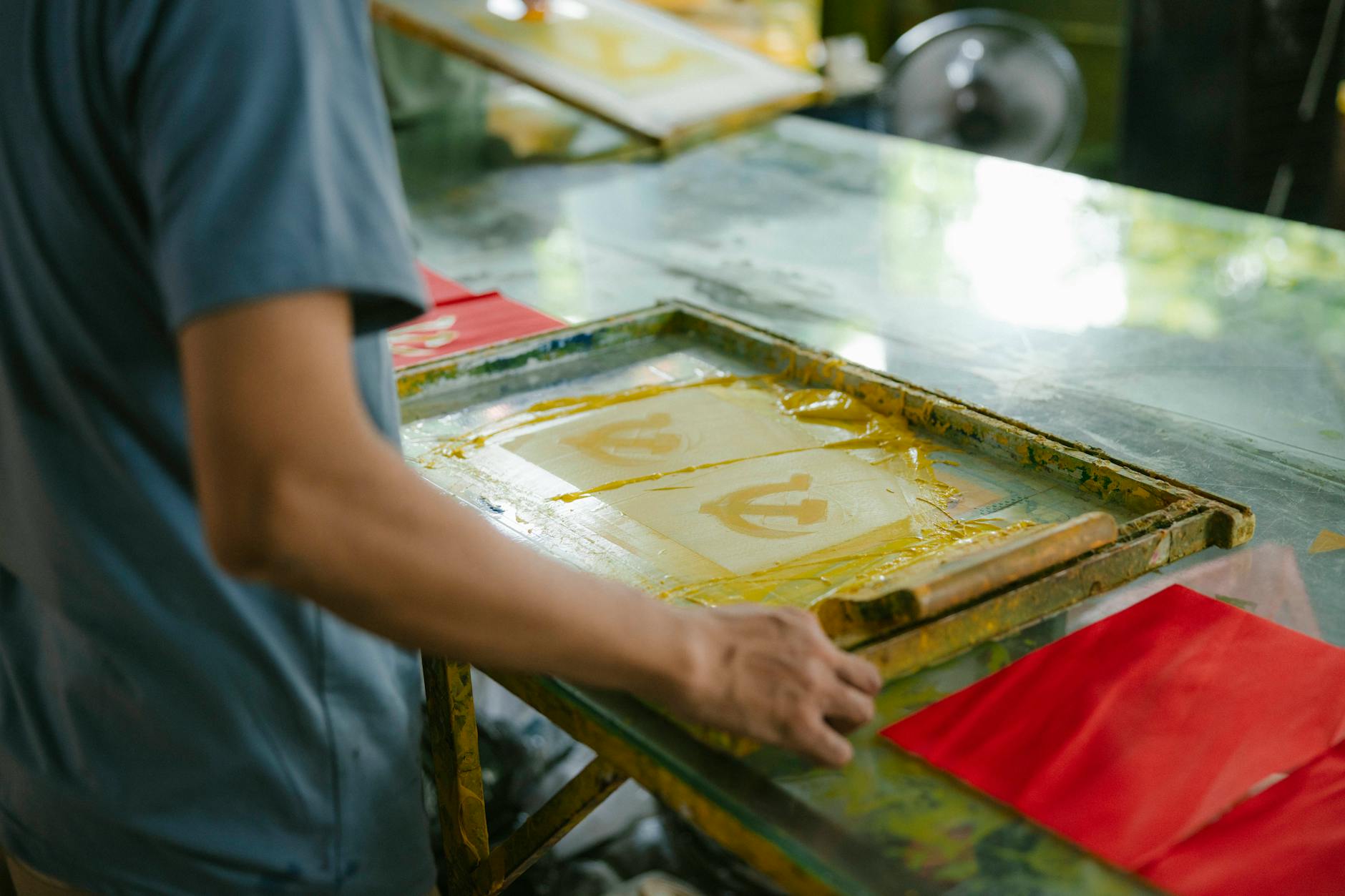
If you’ve ever ordered a batch of branded t-shirts for a product launch, prepped merchandise for a trade show, or kitted out a team in matching uniforms, you already know that the decoration method you choose makes all the difference. Screen printing remains one of the most popular and cost-effective ways to apply bold, vivid branding to a wide range of promotional products — and for Melbourne businesses, marketing agencies, and resellers navigating a competitive landscape, understanding how screen printing works (and when to use it) is genuinely valuable knowledge. This guide breaks down everything you need to know about screen printing services for promotional products in Melbourne, from how the process works to what to look for in a supplier.
What Is Screen Printing and Why Does It Matter for Promo Products?
Screen printing — sometimes called silk screening — is a decoration method that pushes ink through a mesh stencil (or “screen”) directly onto a substrate. Each colour in your design requires a separate screen, and the ink is cured using heat to create a durable, vibrant finish that can withstand heavy washing and regular use.
For promotional products, this matters enormously. You want branded items that look sharp on day one and still look professional after months of use. Screen printing delivers that. The results are consistently crisp, the colours are highly saturated, and the finish feels premium — which is exactly what you need when your merchandise is representing a brand in the real world.
How the Screen Printing Process Works
The basic steps of screen printing are straightforward, though skilled execution makes a significant difference in the final result:
- Artwork preparation — Your design is separated into individual colour layers. Each colour becomes its own film positive, which is then used to expose a screen coated in light-sensitive emulsion.
- Screen creation — The emulsion hardens everywhere except where your design sits, leaving open mesh areas through which ink will pass.
- Printing — The substrate (t-shirt, tote bag, promotional item) is placed on the press, and ink is pulled across each screen in turn.
- Curing — The printed item passes through a heat tunnel or is heat-pressed to bond the ink permanently to the material.
Each colour adds complexity and cost, which is why screen printing is most economical for designs with one to four colours. Large full-colour photographic artwork is better suited to digital printing or UV printing processes, but for clean logos, bold text, and vector-based graphics, screen printing is hard to beat.
The Best Promotional Products for Screen Printing in Melbourne
Screen printing is versatile, but it works best on flat or gently curved surfaces with enough print area to showcase a design properly. Here are the product categories where it genuinely excels.
Custom Apparel
Apparel is the natural home of screen printing. T-shirts, hoodies, polos, singlets, and caps can all be screen printed to outstanding effect. A Melbourne café running a pop-up activation, a sporting club ordering pre-season training shirts, or a startup gearing up for a conference — all of these scenarios benefit enormously from screen-printed apparel. The colours stay vivid through repeated washes, and the per-unit cost drops significantly as quantities increase.
If you’re ordering apparel for a diverse team, it’s worth noting that many Melbourne suppliers can accommodate extended sizing. Our guide to plus size custom t-shirts in Australia covers what to consider when ordering across a full size range.
Tote Bags and Promotional Bags
Cotton tote bags and calico bags are among the most frequently screen-printed promotional products in Australia. They offer a large, flat print surface that shows off logo work beautifully. A Sydney retailer, Brisbane charity, or Melbourne-based marketing agency handing out branded totes at an event is making a practical, sustainable impression. Screen printing on natural cotton gives a particularly premium result.
For brands leaning into sustainability messaging, screen printing pairs well with insulated lunch bags and other eco-conscious carry products.
Promotional Accessories and Everyday Items
Beyond apparel and bags, screen printing is commonly used on items like:
- Lanyards — Whether you’re ordering custom short lanyards for an event or custom USB lanyards for a tech-focused audience, screen printing delivers a clean, professional finish.
- Branded water bottles — While glass and metal drinkware often suits laser engraving or pad printing, certain bottle types work well with screen-applied decoration. See our breakdown of glass branded water bottles for more context on decoration options.
- Promotional parking disc holders — A niche but highly effective automotive promo item. Read about promotional parking disc holders for car wash businesses to see how screen printing can elevate even unexpected product categories.
Understanding Costs, MOQs, and Turnaround Times
One of the most common questions from Melbourne businesses and resellers is: “What does screen printing actually cost?” The honest answer is that it depends on several factors — but here’s a practical framework for budgeting.
Setup Fees and Per-Colour Pricing
Screen printing involves upfront setup costs because each screen must be created before a single item is printed. In Australia, setup fees typically range from $30 to $80 per colour, per screen. This means a two-colour logo will likely carry a setup cost of $60 to $160 on top of the per-unit price.
For resellers and agencies placing orders on behalf of clients, it’s important to factor these setup fees into your quote. They’re a one-off cost that can sometimes be waived on repeat orders with the same artwork.
Minimum Order Quantities
Screen printing is a volume-based process. Setting up screens, mixing inks, and running a press is only economical at scale. Most Melbourne screen printing suppliers work with minimum order quantities (MOQs) of 25 to 50 units for standard t-shirts and bags. Some suppliers will go lower, but expect to pay a premium.
For larger promotional campaigns — think conferences, festivals, or corporate merchandise programmes — orders of 100 to 500+ units bring the per-unit price down considerably. If you’re working with an organisation planning a large event, our piece on branded merchandise for festivals in Australia explores how to plan merch orders at scale effectively.
Turnaround Times in Melbourne
Standard turnaround for screen printing orders in Melbourne is typically 10 to 15 business days from artwork approval. Rush orders can sometimes be accommodated in 5 to 7 business days, though this usually attracts an additional fee.
Key factors that affect turnaround include:
- Number of colours in the design
- Quantity ordered
- Whether a physical sample (strike-off) is required before full production
- Complexity of the substrate being printed
For time-sensitive campaigns — Valentine’s Day promotions, end-of-financial-year merchandise runs, or sporting season kick-offs — it’s wise to start the ordering process at least three to four weeks before you need items in hand. Our guide to Valentine’s Day promotional gifts in Australia is a useful reference for timing seasonal campaigns correctly.
What to Look for in a Melbourne Screen Printing Supplier
Whether you’re a marketing agency sourcing product for a client, a business ordering in-house branded merchandise, or a reseller building out your supplier network, supplier selection is critical. Here’s what to evaluate.
Artwork Capabilities and Pre-Press Support
Strong Melbourne screen printing suppliers will have experienced pre-press teams who can take your artwork and properly separate colours, check registration, and prepare screens to spec. If you’re submitting files, vector artwork (AI, EPS, or PDF) is almost always preferred. Suppliers should be able to advise on the maximum print dimensions for each product and flag any artwork issues before production begins.
PMS Colour Matching
For brands with strict colour guidelines, PMS (Pantone Matching System) colour matching is essential. A reputable supplier will mix inks to match your specified Pantone colours rather than approximating from stock. This is particularly important for corporate clients, government departments, and larger brands where brand consistency is non-negotiable. Ask specifically whether PMS matching is included in the standard quote or priced as an add-on.
Sampling and Proof Approval
Before committing to a full production run, most suppliers will offer a digital proof for approval. For larger or higher-value orders, requesting a physical strike-off (a printed sample on the actual substrate) is a smart move. Yes, it adds a few days and sometimes a small cost, but it eliminates the risk of discovering a colour or placement issue across 500 units after the fact.
Capacity and Specialisation
Some Melbourne screen printers focus primarily on apparel, while others have broader capabilities across hard goods, bags, and promotional accessories. If your requirements span multiple product categories — say, t-shirts plus tote bags plus lanyards — look for suppliers with demonstrated capability across all of them. It simplifies logistics and ensures consistent branding across your entire merchandise suite.
For businesses working across a broader range of branded items, our content on promotional products for businesses in Alice Springs, promotional products in the ACT, and health and wellness promotional product trends illustrates how diverse the branded merchandise landscape can be across Australia.
Screen Printing vs Other Decoration Methods: A Quick Comparison
Screen printing is excellent, but it’s not always the right choice. Here’s a brief overview of when to consider alternatives:
| Decoration Method | Best For | When to Choose Screen Printing Instead |
|---|---|---|
| Embroidery | Polo shirts, caps, workwear | When you need large print areas or fine detail |
| Digital/DTG printing | Small runs, full-colour photographic art | When you need bold, single/dual-colour logos at volume |
| Laser engraving | Metal and wood items, drinkware | When branding fabric, cotton, or bags |
| Pad printing | Small hard goods, pens | When branding large flat surfaces |
For technology products like laser engraved wireless chargers or branded safety glasses for manufacturing environments, engraving or pad printing typically outperforms screen printing. But for apparel, bags, and large-area soft goods at volume, screen printing remains the gold standard.
Conclusion: Making Screen Printing Work for Your Melbourne Promotions
Screen printing services for promotional products in Melbourne give businesses, agencies, and resellers access to a proven, high-quality decoration method that delivers strong results across the most popular promotional product categories. The key is understanding the economics — setup fees, MOQs, and colour complexity — and choosing a supplier with the technical capability and pre-press expertise to execute your artwork faithfully.
Here are the key takeaways:
- Screen printing excels at volume — the more units you order, the lower your per-unit cost, making it ideal for large events, campaigns, and seasonal merchandise runs
- Artwork quality determines print quality — always supply vector files and specify PMS colours where brand consistency matters
- Setup fees are unavoidable but manageable — factor them into client quotes from the start, and negotiate waivers on repeat orders with the same artwork
- Turnaround typically runs 10 to 15 business days — build this into campaign timelines and order well ahead of deadlines
- Not every product suits screen printing — evaluate the substrate, decoration area, and colour count before committing, and consider complementary methods like engraving or embroidery for certain items in your merchandise mix
With the right supplier relationship and a clear brief, screen printing remains one of the most impactful, cost-effective ways to put your brand in front of an audience — and Melbourne has the supplier base to deliver it at scale.